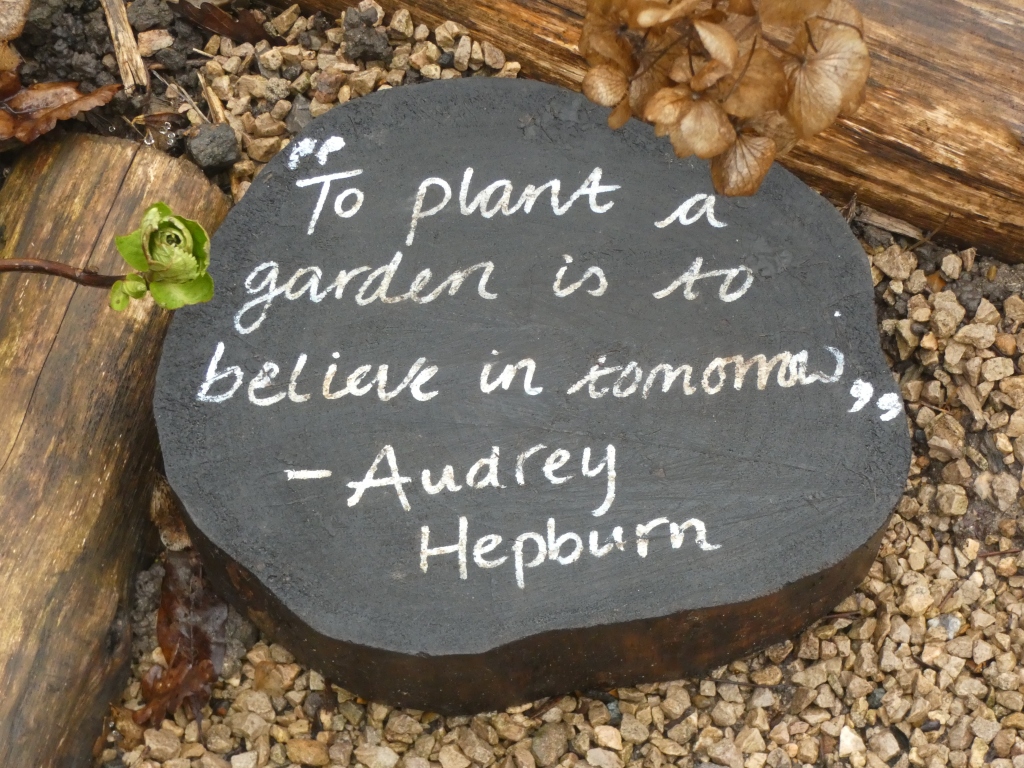
It’s very easy to become consumed with negativity. Wars, disease, poverty, the list is as old as time and ever present in various forms. There are pressures, both put upon us and self inflicted on what constitutes success, leaving us with a feeling of failure or lack of hope. But the reverse can be true.
To be hopeful and optimistic is not to ignore the present, indeed is not even an “easy” option but is to see the joy and possibility.
Be it the smile on a child’s face.
The cat lying in the one sunny spot in the house.
The birds with overly optimistic ideas on what is a suitable stick for a nest, but they still try.
The buds on shrubs and flowers heralding the impending and inevitable arrival of spring and warm sunny days.
A cup of tea in bed brought by a loving partner.
The sound of a concert stadium, the unified joy of all the participants.
The poppies of Flanders Fields.
The welcoming hands of strangers in Poland, Romania, Moldova and Hungry.
Around all these things may be challenges (indeed the worst challenges we can imagine) but to be hopeful and optimistic is not a simple choice, nor a naive choice but an active and often challenging choice. It means being able to see potential solutions to challenges. It means being the “supportive arm” to those who are burdened. It means changing the narrative from “half empty” to “half full”. It is to believe that things can ultimately be better.
It is easy to believe that the biggest challenges from any form of prejudice are those most overt, vocal issues. But in all likelihood it is those “silent pillars of prejudice” that create a deeper rooted challenge to change. It is a topic that is discussed in depth in John Barnes, the ex-England footballers, excellent book The Uncomfortable Truth about Racism. But as John also touches on in his book its not just true of racism but with respect to any form of discrimination.
The reality is that someone who is being openly prejudiced is to some degree easier to deal with because there is no hiding their opinion of a specific situation. There is no place for offensive or illegal behaviour but it also likely does not reflect the general population opinion. More likely a bigger challenge is these unconscious bias’s, that given we all will have some, can really impact large groups of people.
A manager may for example have an unconscious bias with respect to women and senior leadership positions. The result is the women end up having to achieve more than male colleagues before they get promoted. Add in any other unconscious bias’s the manager may have with respect to race, gender or illness or disability and you can see for some groups life can suddenly become very hard indeed. We all like to think we don’t have these unconscious bias’s but we do. As John says in his book, it is good to sometimes stop and ask yourself why am I thinking/doing that. Am I making an assumption because of an unconscious bias. If someone says this is a problem then we need to listen and not just dismiss them because that’s not how we see the situation. It might not be the situation for us but it very likely is the situation for them.
It is also a better way to explain the glass ceiling and the lack of diversity in senior leadership positions. Potential candidates are dismissed before they even had a chance because of unconscious assumptions that are being made. How many quiet souls end up in these leadership positions, not many, because many people think quiet means weak, when actually these quiet folk might not say a lot but when they do boy do they make a point and probably because they have spent some time thinking about it a more rounded and valid point. The reality is every manager will have an unconscious view of every employee. Looking back I did. We need to recognise that and make sure we ask the person how they see themselves and they may surprise us but remember it doesn’t mean they are the ones who are wrong.
But this unconscious bias can affect all aspects of life. Oh she’s a bit eccentric. Oh he never comes out, no point inviting him. They don’t mix etc. We all do it and if we can recognise we do it we can potentially make a huge difference to other peoples lives. But also we need to be aware the others may be doing this to us and not being afraid to call people out about it. By each of us making this small change, recognising we can have unconscious biases we really could effect significant and positive change.
The other day I was talking with a contact who was considering her next career moves. We had met a few times over the years at various meetings and she knew I had taken the step to running my own consultancy business, a step she was considering. My contact had been working for nearly 15 years in academia but never as an academic having after her PhD moved into a project management role. What was interesting was the way her role had been viewed within academia and the impact that had had on her confidence. She had managed significant budgets, organised and ensured delivery of major projects, consistently using her significant scientific knowledge; ironically skills that would have been lauded within a business environment. But within academia she felt she was a failure, her work not valued. She was prevented from publishing (and indeed was not included on publications) a major disadvantage in an arena where publications are king.
As we chatted it was clear she has the makings of a sound business proposal but what she lacked in spades was confidence. Suddenly she asked “Do you or have you ever felt like an imposter? Its just I feel like this all the time”. It got me thinking did I or had I felt like this and the answer was most definitely yes and interestingly it was as I too was leaving academia. I was lucky I met a wonderful careers advisory consultant who spent a couple of hours just talking with me as we worked on my CV. By the time we had finished the CV looked amazing, but up until that point I had never seen myself that way because I didn’t value what I did and moving into the commercial world I felt like an imposter.
It can be a particular issue for females although its not an exclusive thing and many people I am sure also struggle with it. But we need to be aware, many men particularly alpha males are very confident and present well even if they may not be best suited for a task or role. For those struggling with imposter syndrome they grossly under value their skills, over worry about gaps and fail to realise just how much they have to offer and through this are held back. Be in work, relationships whatever. We need to consider how we break this cycle, puberty probably plays a part as confidence is often low but also other life challenges (in my case health was probably a big factor). But if we fail to recognise the extent of the issue and how it holds back so many able people we are failing to not only give them the skills to deal with life but the world remains the preserve of those who are confident. However, just because they think they are, perhaps they are not always the best option but somehow everyone is still more often than not swayed by the bravado.
Would I have done so much with my life if I had not met that amazing careers advisor – I really don’t think I would. She gave me the confidence to just go for things but remain true to myself, what was the worst that could happen, someone could say no. And do you know what more often than not they didn’t. I am not saying everyone needs to be ballsy, just everyone but especially young women should be given the tools from a young age to value themselves.
It sometimes feels like everyone is angry all of the time. Every event however minor releases a flurry of anger. Now a bit of anger directed where its needed can be a good thing it can result in purposeful change but that’s not what I talking about here. No its the relentless anger that seems to pervade everything these days and the danger is that this is very bad for our health both physical and mental.
Take an average day on social media and many of my contacts will be tagging articles and venting their frustrations but more often than not their anger. Because of how interconnected many people are this will be followed up by other people responding and commenting and suddenly this anger is spreading its tentacles very quickly as well as morphing such that the anger increases. It some ways its quite fascinating. But it has serious implications as well.
New York Times columnist David Brooks recently suggested historians define our era by pervasive fear in politics, media and society. We are biologically wired to deal with threats, the body is designed with fright and flight mechanisms which were fantastic in the past when escaping from a sabre tooth tiger. But today are bodies are responding to work, politics and most definitely the media. Our balance has gone and everything is bad and we respond as such; the train is late – explosive anger, I don’t agree with that political statement – explosive anger, I don’t like your blog post – explosive anger, yet more “bad” news – explosive anger. Is it little wonder that concerns for mental health are increasing and in particular in children, especially when we consider what we and they are exposed to all the time.
The internet is a wonderful thing it allows connectivity, its how I am able to write this post and communicate with anyone who wants to read it. The internet allows the sharing of information. The trouble with humans is we are hard wired to seek out bad news, its what protects us. But the trouble today is the media knows this, it whats behind most of the “click-bait” and so do many people when they are writing social posts. If I share a happy item on Facebook for example I will get some feedback but if I really want to feed my ego and get lots of responses I would just have to post something that had more negative connotations. The main stream media know this too; everything is a crisis, the worst ever, a disaster. Somethings are but not everything and even if something is bad it doesn’t mean there is a solution.
Its the things that are not really a crisis that we really need to stamp on for the sake of all our health. If my train is late its not a crisis, its annoying but I will get home, there will be a solution. A few fuel stations not having fuel was not a crisis, again it was annoying but there was a solution and it wasn’t fanning flames of panic. The media claims they were just reporting the news but that was disingenuous and they know it. I often go past my local fuel station and it doesn’t have fuel, it doesn’t typically make the news. The population is currently fragile after 18 months of a pandemic, little glimmers of light are therefore rich pickings for anyone that wants to tell you “something bad will happen” and “you won’t get to enjoy it”. The surprise surprise you are angry again.
Is it any wonder that so many young people seem to think we have no hope, that they despair and stressed to an extent that I don’t recall from my own childhood. We need to take a look at how we respond but also how we help them respond. Humans are remarkable they can create the most beautiful things and solve the most complex challenges. Yes there needs to be a will but as we have seen over the last year humans can effect change quickly and efficiently. Now you may point out that perhaps we need to do more of that and I would not necessarily disagree but lets get creative and encourage ideas.
Thomas Koenig wrote a piece in the National Review on the tribalism and partisanship that he saw as corroding politics in the US. But actually his point could be made about many aspects of life around the world. This need to have as he put it “an unquestioning devotion to a group” the “Us” and “the visceral loathing of them”. It is as he writes corrosive and means that we loose the ability to have rational debates and discussions.
It is definitely evident in much of politics but it creeps into so much more of every day life than that. Social media is awash with opinions and the damning of those that think differently. It certainly drives me away from interacting on social media. I remember fondly some of the debates and chewing the cud I had with friends as a student, quite a few years ago now. Do today’s young feel they can have these discussions and if they don’t isn’t that sad?
I feel fortunate I have friends who I can have robust debates with. We can have different opinions on many things but those discussions I think lead us all to be more rounded individuals because we listen. We may often agree to disagree but at some level have a better understanding of another view and I think all the better for that.
Sitting on my bookshelf is a small plastic beaker with a split down the side. Yet this little beaker is very precious. The beaker has painted on it a picture of Mickey Mouse and on the back the words Merry Xmas Graham. Graham was my dad and the beaker was his.
My dad was born in 1937 and therefore his formative childhood years were during WW2. Like most, there was little to be had at any time and this was no different at Christmas. He remembered walnuts in his stocking (they had a tree in the garden) and usually a book and some small item, new to him but not necessarily new.
I can only hazard a guess that this little beaker was one such gift. The Mickey Mouse is clearly painted on, as is the inscription and my hunch looking at it, that it’s the hand of a talented amateur. But clearly this little beaker meant a lot to my dad as he always kept it, indeed the only thing from his childhood he kept. Tucked away in a corner of a kitchen cupboard it resurfaced as we cleared his house.
Now this precious little beaker is a reminder of my dad. No longer confined to the cupboard it “smiles” at me every time I wander over to get a book. I wish I had had the opportunity to ask my dad about the beaker but as is often the way it was found too late. But more than anything it resonates with me because this little beaker so simply captures what a lovely man my dad was and for that I will always treasure it.
For the last few months other than to buy food I like most people have been living in my little family bubble. I have made plenty of steps outside, lucky to have the wide expanses of the marshes to enjoy and to have a distant wave and shouted greetings to neighbors. But this morning I did something I haven’t done for months I actively went into another building where there would be other people. To be honest it felt weird and not because of the safety precautions, indeed these were reassuring, but I am just so unused to being in company.
The place I choose to venture as my first steps back into the rest of the world was the gym. This is because it is incredibly well run, all the equipment is widely spaced and I could pick my time when I know it is less busy. The thing that most struck me was how happy my fellow attendees were. Smiles and waves, much chatting, so much more than normal when its typically headphones on and focus on the task in hand. Even people I didn’t know, laughing about aching limbs and not being sure we could even remember how to use some of the equipment. People were quite simply happy.
This is not to dismiss the ever present risk corona virus is but is also to acknowledge that for many people these last months have been very hard. So when you see pictures today of crowds of people shopping or in a pub don’t be quick to criticise. Firstly, camera angles can cause foreshortening and those crowded scenes may not be quite as crowded as they look. Just as for me at the gym, you know your local areas and will know the quieter times and places if that is what you want. Once the novelty has worn off things will settle, but like cattle that have been in the barn all winter and then let out onto the meadow, yesterday was always going to be a bit skittish.
Corona virus is here to stay but I genuinely believe there are ways to getting back to a more open society we just have to remember for each of us the pace that occurs will be different. Respect and consideration will help us all at our own pace to feel confident to takes those steps inside.
It was one of those wonderfully rare Mondays perfect weather and being between projects nothing to keep me at my desk. Although the sun was shining, there was a strong breeze and the early morning spring chill. So after a few months of being left to idol in the garage I dusted off the bike and set off camera in hand down our rural lanes. Being on the bike certainly puts you as one with nature. Birds in particular are less concerned and it provides the opportunity to get up close. The sparrows chattering away in the hedging, the overhead battle between gulls and buzzard (no contest the gulls won). One thing that always strikes me being on the bike is just how noisy nature can be. When you walk the wildlife goes quiet when you are near, sensing danger but on the bike the just carry on singing; clearly the bike is my very own cloak of invisibility which is quite something in my bright yellow coat.
I am also struck by how a bike can bring out the almost child like joy in people. To be honest I like nothing more than whizzing down a hill or zipping through a big puddle with the associated childish giggles. Clearly I am not alone, a couple of shall we say mature years, were like a pair of five year olds as they whipped past, down the hill convulsing in giggles by the time they had got to the bottom. The bike providing not only physical but mental well being too. Perhaps in the last year we have all had the time to reflect on the need to find joy in the simplest of things. I have noticed too how much more interaction I have with those I cycle past, a chat here, a friendly wave, encouragement to get up the hill. Genuine smiles of people, happy for some engagement.
Then are those rare moments that make you feel very privileged. On my ride today I saw a group of people walking up ahead. Not your traditional hikers as they dressed in black and suits. As I came up to them it became clear these were mourners. They explained they had just been to the funeral for their relative at our local parish church. Their relative had loved this area having lived in the village for years. After the small service they were walking his favourite route, carrying his picture, a simple but beautiful way that they could be together to remember him.
How often do we hear people comment, “well that’s just not normal”, when what they really mean is it wouldn’t be normal for them.
To quote Charles Addams “normal is an illusion, what’s normal for the spider is chaos for the fly”
As a biologist I am very aware of the dangerous waters that can be travelled by referring to something or some biological process as “normal”. At a minimum things may be referred to as a normal range but even that will come with a vast array of caveats relating to environment, diet, and a multitude of other factors. In my day job far better to refer to things as healthy which when you think about it is something we readily accept may mean different things to different people.
The danger of normal is that it by definition causes exclusion for that which differs. In the modern world with the internet swamping people with images of what is supposedly “normal” it is little wonder we have large numbers of young people overcome with self doubt and feeling excluded.
You look different, you are not normal.
You sound different, you are not normal.
Your music tastes are different you are not normal.
You wear different clothes, you are not normal.
You have a disability, you are not normal.
But the reality is you are normal for you.
Each of us is unique. Each of us will have likes, dislikes, health and life experiences which will shape us as an individual. It can be hard when you are young to be proud and confident of who you are. As someone who had medical conditions that made me different I know that feeling of just wanting to be “normal”. But here in my fifties I am finally getting to the point where I am confident with just being me and accepting that “hey that’s just normal for me, like it or lump it”.
Its strange to think that exactly a year ago I was in London, having an appraisal for my then job and although I knew I was leaving it was a couple of months away. Little did I know that this would be my last day in the office and the last time I would see my former colleagues, as was to become the norm for many over the past year my leaving was marked by a Zoom event. While there is absolutely no getting away from the devastation the pandemic has and continues to cause, this last year has also allowed many of us the time to see things differently and to step back and reassess. So for me this is what the last year has taught me.
Although stepping away from a regular job with a regular income to setting up my own business was scary and became even more so when I realised I would be doing this during a pandemic; it has been absolutely the best thing I could have done. The joy of running a business on my terms, in the way I want to run business and the positive feedback I have had from clients has been amazing. Clearly things have been different but what has been especially great has been the amazing network of women who have put me forward as an option to their clients and who have without doubt helped me grow my business. This women-wide-web is fantastic.
The time to just be, with no pressure to do anything else because frankly I wasn’t allowed to go anywhere, has been something I have been very fortunate to enjoy. That’s not to say I don’t like company because I do (although I am quite picky), but my hobbies of reading, gardening, walking, bird watching, photography and craft all absorb me. Its made me realise how important this is because at any stage of life we may encounter solitude or enforced restrictions, planned or unplanned and having a range of things that make you happy are key. This year has reminded me how important it is to know what, other than work, makes you tick.
Life can throw a sucker punch. The loss of a close family member too young and too early has reminded me that we never know what is around the corner and we really must live to the full. Because for those left behind the memories that have been made are precious mementos, that support them through the challenging times ahead. I am in awe of the bravery and resilience of my sister-in-law and my nephew and nieces who have learnt the hardest lesson of life, to loose the one you love so much.
It is worth spending a little time with Apps like Ziffit. I have read a lot of books over the last year, some I will read many times over but others I have enjoyed but they won’t end up on my shelf. Normally these would pass to charity shops but not an option currently. That’s when I discovered the donate option on Ziffit (and I sure many of the other similar apps). I scan the books, the pennies add up. I deposit the boxed books at the collection point and the donation goes to a local charity. Now most of the books get very little but this is a modern way to look after the pennies and the pounds will look after themselves and even small donations can and are a lifeline to charities. So for very little effort my books get a new home and the local animal charity can buy a bit more food, win, win.
Community matters; but lets be honest how many of us took much of what was happening locally for granted. Indeed many of us may have even ignored local small shops etc as we rushed through life. But lets be honest where, when we have been allowed, over the last year has been our first port of call. Which shops did we become dependent on for food or small treats. Having been literally local for the last year I have really got to know the local businesses. The pub that has brought us a weekly meal, the bookshop that has delivered on their bike, the food shops which have provided small treats when nothing else was open, the garden nurseries which become like a virtual sweetshop of gaudy loveliness, the garden which opened for mothering Sunday (just a chance to go somewhere safely); these people make where I live special and least we forget when everything starts to reopen, they were there for us and we need to be there to help them recover.
I genuinely hope flexible working is here to stay. The big disadvantage of more normal life returning will be some need to travel for work but equally an acknowledgement from business that not everything needs to be done in the office. It will be different for different people but no longer can business use the excuse that these office based jobs can’t really be done from home; they clearly can.
Access to green space is vital, too much housing particularly in cities is built with little or no access to an outside space. This needs to change and open space needs to become a requirement for building permission. As cities and towns adjust to their next phases it would be great if more could consider converting disused shopping areas into a mixture of living and working, as well as green space as is being considered for Broadmarsh in Nottingham.
Constant negativity is energy sapping. In this technological age it is very easy to communicate. Sadly human nature seems to be geared to finding the worst in everything (the glass being very much half empty). Every headline is dramatic. Every comment is pithy. I have stepped back, actively not looking at media and social media and I find myself much happier.
I am lucky to have someone very special in my life and despite being in the same space 24/7 for a year we haven’t killed each other; that is definitely a result.